


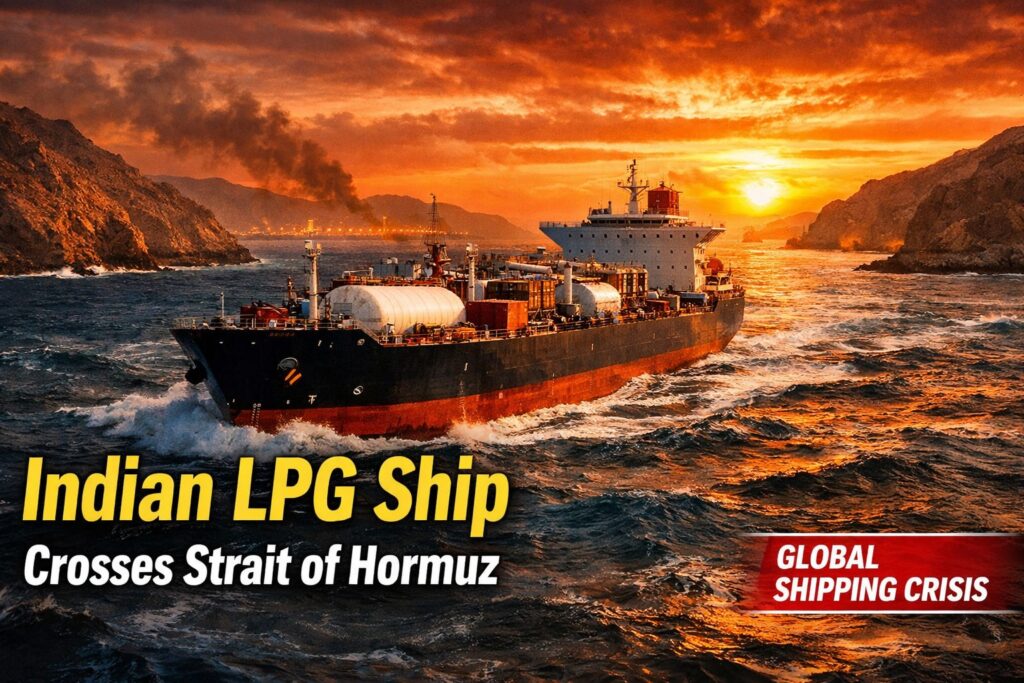
Indian LPG Carrier Shivalik Crosses Strait of Hormuz Amid Ongoing West Asia Conflict
Ship Carrying 55,000 Tonnes of LPG Moves Through Volatile Waterway
In a significant development amid the ongoing tensions in West Asia, the Indian-flagged LPG carrier Shivalik successfully crossed the Strait of Hormuz on Friday night (March 13, 2026), according to data from shipping tracker marinetraffic.com.
The vessel had departed from Ras Laffan port in Qatar on March 7 and was initially bound for the United States. However, its movement has drawn global attention because the crossing happened during heightened tensions in the region following the ongoing Iran-Israel conflict.
Government officials have clarified that the Indian Navy is not escorting the ship, dismissing speculation circulating on social media.
A Key Cargo for India’s Energy Supply (LPG Carrier Shivalik)
The Shivalik is capable of carrying more than 54,000 tonnes of LPG, and the cargo onboard is estimated to be nearly equal to one day of India’s LPG imports.
The ship is currently owned by the Shipping Corporation of India (SCI). Built in 2008, the vessel originally belonged to Qatar Shipping Company and has changed ownership multiple times before becoming part of SCI’s fleet.

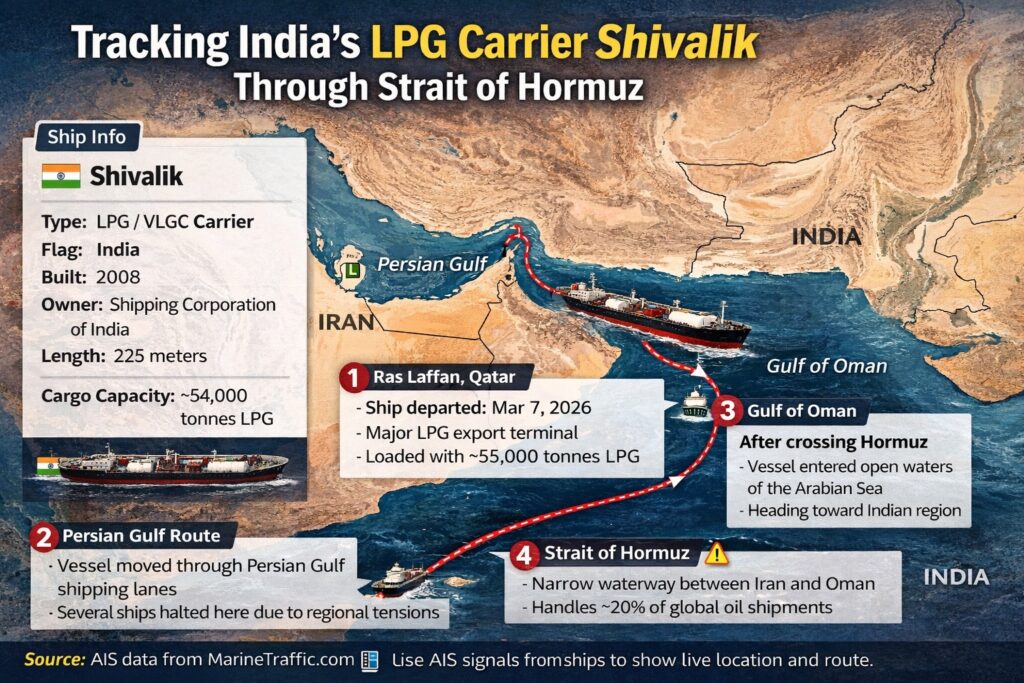
The Shivalik and another LPG carrier, Sahyadri, were added to SCI’s fleet between August and September 2025.
Before making the crossing, the Shivalik had been stranded near the Strait of Hormuz since February 28, when the regional conflict escalated and commercial ships began halting operations due to security concerns.
Many Indian Ships Still Stranded
According to officials from India’s Shipping and Waterways Ministry, several Indian-flagged vessels remain stuck in the region.
- 27 Indian ships are still stranded in the Persian Gulf and Gulf of Oman.
- Three cargo ships with 76 Indian seafarers remain in the Gulf of Oman.
- 23 vessels inside the Persian Gulf, west of the Strait of Hormuz, are yet to move.
Another ship, the oil tanker Jag Prakash, has recently resumed its journey. The tanker, owned by the Great Eastern Shipping Company, had loaded oil products in Sohar, Oman, and is headed to Tanzania.
Unlike the LPG Carrier Shivalik, Jag Prakash did not have to cross the Strait of Hormuz because it was already located east of the waterway.
Risks Increase in the Strait of Hormuz
The Strait of Hormuz remains one of the world’s most sensitive maritime routes, especially after Iran’s newly elected Supreme Leader, Mojtaba Khamenei, stated that the strait should remain closed amid the conflict.
Shipping companies remain cautious about sending vessels through the region due to the risk of attacks.
Since the conflict began on February 28, nearly 600 ships were reportedly stranded in the surrounding waters.
Another vessel, the crude oil carrier Shenlong, successfully crossed the strait earlier this month while transporting one million barrels of oil to Mumbai.
Reports say the ship had to navigate carefully because of GPS spoofing and signal jamming, tactics commonly used in modern warfare that can mislead ships about their actual location. In some cases, vessels switch off their Automatic Identification System (AIS) and rely on manual navigation to avoid becoming easy targets.
Safety Concerns for Indian Seafarers
The conflict has also raised concerns about the safety of Indian sailors working in the region.
According to Rajesh Kumar Sinha, Special Secretary at the Shipping and Waterways Ministry, nearly 23,000 Indian nationals work on merchant ships, ports, and offshore vessels in the Persian Gulf region.
The government and the Directorate General of Shipping are reportedly maintaining regular contact with them.
Unfortunately, the war has already claimed four Indian seafarers’ lives.
On March 11, an Indian sailor was killed when the vessel Safesea Vishnu was attacked near Basra, Iraq. The remaining 15 Indian crew members were reported safe.
The ship was flagged in the Marshall Islands and owned by a company based in New Jersey, but it is managed by Bravo Ship Management in Chennai.
Government Warns Against Rumours
The Directorate General of Shipping (DGS) has issued an advisory urging people and maritime stakeholders to avoid sharing unverified information about ships operating in the Gulf region.
Officials say false reports circulating on social media are creating panic among seafarers and their families.
The government has urged shipping companies, unions, and individuals to share only confirmed updates from official sources to prevent confusion during this sensitive period.
Authorities say they are closely monitoring the situation and working with international partners to ensure the safety of Indian ships and sailors.
Conclusion
The crossing of the LPG Carrier Shivalik through the Strait of Hormuz highlights both the strategic importance and the growing risks of maritime trade routes during geopolitical conflicts. While the ship’s successful passage offers a small sign of relief, dozens of Indian vessels and thousands of seafarers remain in uncertain conditions as tensions continue in the region.
Please visit: https://firstnewstime.com for other news.