


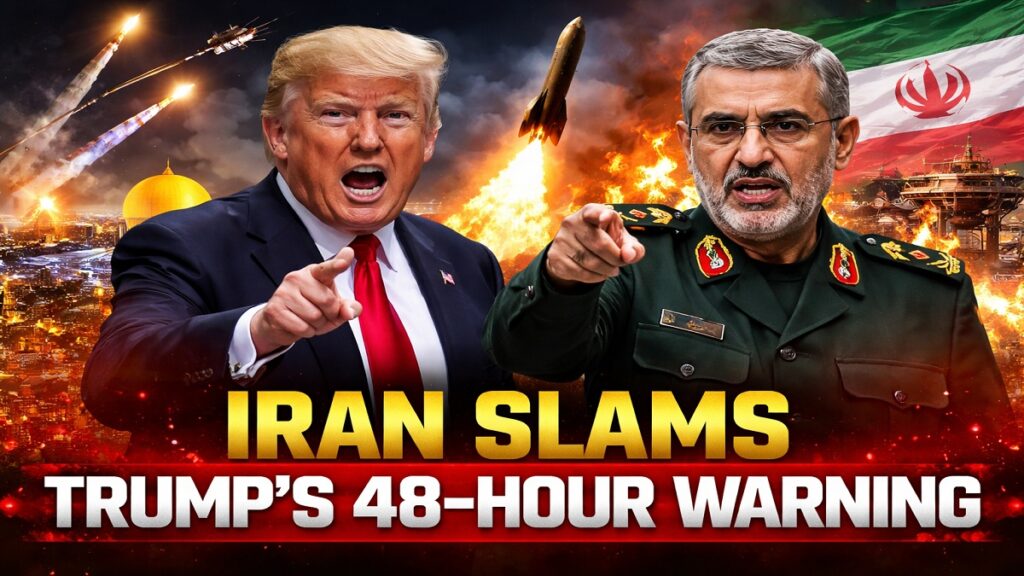
Iran US War Escalates After Trump’s 48 Hour Ultimatum and Missile Strikes
It feels like the situation in the Middle East is getting more intense by the day—and Saturday was no different.
Iran sharply pushed back against a dramatic warning from former US President Donald Trump, who gave Tehran just 48 hours to agree to a deal or face massive destruction of its key infrastructure.
The response from Iran wasn’t just a routine statement—it was emotional, direct, and full of anger.
General Ali Abdollahi Aliabadi didn’t hold back. He called Trump’s threat “helpless” and “unbalanced,” and warned that such language could have serious consequences. In a striking line that mirrored Trump’s own tone, he said the message essentially meant that “the gates of hell will open.”
Explosions in Jerusalem Add to the Fear
While leaders exchanged words, the reality on the ground told its own story.
In Jerusalem, loud explosions were heard after Israeli forces detected incoming Iranian missiles. Journalists reported hearing at least six blasts in the night sky—another reminder that this conflict is no longer just about warnings and statements.
This ongoing Iran US war, now stretching over a month, began after US and Israeli strikes hit Tehran. Since then, both sides have continued to respond, pulling the entire region into a tense and dangerous cycle.
Trump Doubles Down on His Warning
Trump’s message, posted on Truth Social, was clear and urgent. He reminded Iran of his earlier deadline and said time was running out.
At the center of this pressure is the Strait of Hormuz—a narrow but extremely important route through which a large portion of the world’s oil supply passes.
For many watching globally, this isn’t just about politics anymore. Any disruption there could affect fuel prices and economies far beyond the Middle East.
Russia Reacts Strongly to Nuclear Strike
Another major concern came from Russia.
After reports that a strike hit Iran’s Bushehr nuclear facility in ongoing Iran US war—where Russian personnel are present—Moscow strongly condemned the attack.
Foreign Ministry spokesperson Maria Zakharova described it as an “evil deed” and called for an immediate stop to such actions, especially when nuclear sites are involved.
According to Iranian media, at least one person was killed near the site, while other strikes in industrial zones left several people injured.
Iran Leaves Door Open for Talks
Even in the middle of all this, there are small signs that diplomacy hasn’t completely collapsed.
Iran’s Foreign Minister Abbas Araghchi said the country has not rejected the idea of talks in Iran US war, including mediation efforts involving Pakistan.
But he made one thing clear—Iran wants a meaningful and lasting end to the conflict, not just temporary arrangements.
Rising Risks in the Persian Gulf
The tension isn’t limited to land.
In the Persian Gulf, reports suggest another US military aircraft went down near the Strait of Hormuz. Around the same time, Iran reportedly shot down a US fighter jet.
While some crew members have been rescued, these incidents show how quickly things could spiral further.
Interestingly, Trump brushed off concerns that these losses might affect negotiations, saying simply, “It’s war.”
Conflict Spreads Beyond War Zones
What’s worrying is how far the impact is spreading.
In Dubai, falling debris from intercepted drones damaged buildings, including one linked to Oracle. Thankfully, no injuries were reported—but it’s a sign that even cities outside direct conflict zones are not untouched.
Iran has also warned several US companies, accusing them of involvement in espionage. Earlier drone strikes had already damaged infrastructure connected to Amazon Web Services in the region.
A Situation the World Is Watching Closely
Right now, this conflict is about more than just Iran, Israel, or the United States.
It’s affecting global oil routes, international relations, and everyday lives across multiple countries. With strong words, military actions, and fragile diplomacy all happening at once, the next couple of days could be crucial.
Whether things calm down—or move closer to a wider war—remains uncertain.
Please visit First News Time to get latest news.